
The U.S. Department of Defense has long recognized that environmental health conditions directly affect military readiness, living conditions, and personnel welfare. High-density housing environments, including military barracks and government residential facilities, create unique operational challenges because large groups of people live in shared spaces for extended periods.
Shared residential environments naturally increase exposure to sanitation concerns, particularly during training cycles, deployments, seasonal occupancy increases, or emergency housing situations. Resources discussing bed bug treatment for hotels and businesses also examine common concerns involving high-turnover living environments because frequent movement of people, luggage, bedding, and personal items can increase opportunities for pest transfer between spaces.
Unlike standard residential housing, military and government facilities operate under structured procedures designed to maintain health standards and reduce disruptions. Pest prevention in these environments is not simply a maintenance issue. It becomes part of broader operational planning because living conditions influence personnel performance, health, and overall readiness.
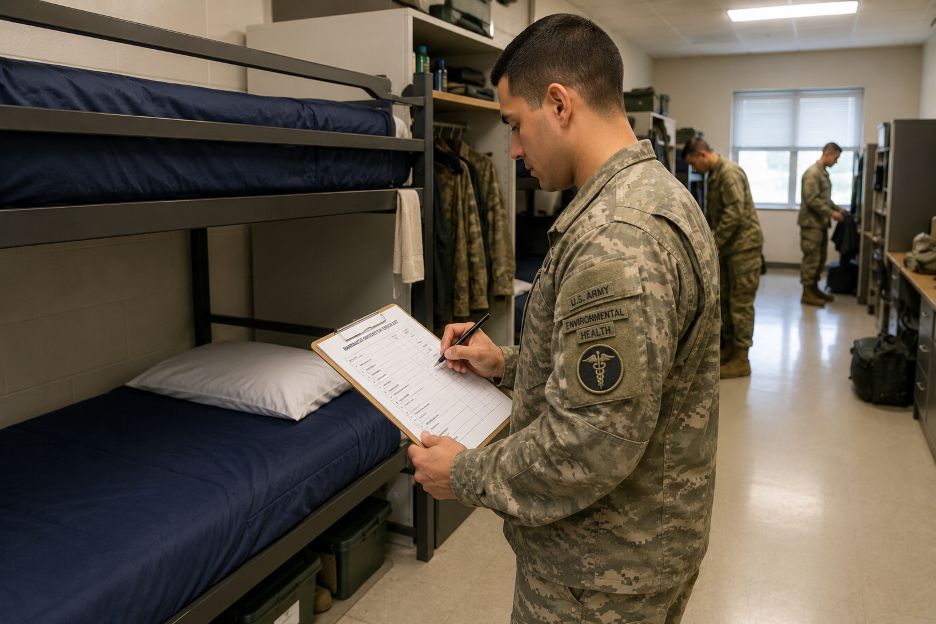
Overview of Shared Government Housing Risks
Government housing facilities and military barracks often experience periods of elevated occupancy. Temporary assignments, training exercises, emergency mobilizations, and personnel transitions can significantly increase housing density within a short period.
Research from the Centers for Disease Control and Prevention (CDC) shows that crowded living environments may increase opportunities for disease transmission and environmental health issues. While pests themselves vary by climate and location, high-density housing can create conditions that allow problems to spread more quickly.
Common factors that increase risks include:
- Frequent movement of residents in and out of housing units
- Shared sleeping and storage areas
- Large quantities of personal belongings
- Communal laundry facilities
- High use of common spaces
- Heavy movement of luggage and equipment
Military housing can differ significantly depending on mission requirements and geographical location. Personnel stationed in tropical climates may face different environmental concerns compared with facilities in colder regions. Pest management programs therefore often require localized strategies rather than a single universal approach.
Pest Management Protocols in Barracks
Military facilities generally approach pest prevention through organized environmental health programs. These programs focus on early detection, sanitation practices, routine inspections, and professional intervention when needed.
Experts from the U.S. Army Public Health Center note that integrated pest management remains one of the most effective approaches for controlling environmental risks. Integrated Pest Management, often called IPM, combines multiple preventive methods instead of depending entirely on chemical treatment.
Typical barracks protocols may include:
- Scheduled room inspections
- Monitoring of shared facilities
- Waste disposal procedures
- Education for personnel
- Laundry and bedding management guidelines
- Reporting systems for unusual activity
Education plays a major role. Residents are often instructed to identify signs of potential problems, including unusual stains on bedding, insect activity around sleeping areas, or evidence of infestations near lockers and storage spaces.
Rapid reporting systems can reduce the chance of small issues becoming larger operational concerns.
Operational Readiness Concerns
Military operations rely heavily on personnel readiness. Living environments that create discomfort or health concerns can affect concentration, sleep quality, and day-to-day performance.
Data published through the Defense Health Agency suggests that environmental health issues may influence overall force health protection initiatives. Even relatively small disruptions can create ripple effects when hundreds or thousands of individuals share facilities.
Sleep disruption remains an important concern in military settings. Personnel often work long hours and maintain demanding schedules. Housing environments that interfere with rest may indirectly affect performance and recovery.
For this reason, environmental management teams often prioritize early intervention measures. Waiting for visible widespread problems may create larger logistical challenges later.
During large training periods or temporary surges in occupancy, facility managers may increase inspection frequency and sanitation efforts. Additional oversight helps identify concerns before they affect larger populations. Discussions surrounding government cleaning support for infantry housing also highlight how routine sanitation practices can help maintain healthier shared environments during demanding operational periods.
Inspection Standards and Monitoring Procedures
Routine inspection systems form an important part of housing management strategies. Inspection procedures vary by organization and facility type, but many government housing programs rely on standardized checklists and documented reporting.
The U.S. Environmental Protection Agency (EPA) indicates that monitoring and prevention frequently produce better long-term results than responding only after conditions worsen.
Inspection activities commonly include:
- Checking mattresses and bedding areas
- Reviewing furniture and storage spaces
- Examining ventilation systems
- Assessing moisture conditions
- Inspecting laundry facilities
- Monitoring waste collection areas
Moisture control often receives particular attention. Excess humidity and water leaks can create favorable conditions for various pests. Maintenance teams may therefore coordinate closely with environmental health staff to address structural concerns quickly.
Documentation also matters. Tracking recurring issues allows facility managers to identify patterns and adjust prevention procedures over time.
Long-Term Prevention Measures
Long-term prevention efforts typically focus on reducing risk factors before problems appear. Successful programs often rely on consistency rather than isolated interventions.
Military and government housing facilities frequently incorporate preventive measures into routine operations.
- Scheduled maintenance of buildings
- Regular cleaning programs
- Resident awareness education
- Infrastructure repairs
- Environmental monitoring systems
- Professional assessment when necessary
Research published by the National Center for Healthy Housing shows that preventive environmental practices generally reduce long-term management costs compared with reactive responses alone.
Large residential systems benefit from a layered approach. Education, inspections, sanitation practices, maintenance procedures, and environmental monitoring work together to support healthier housing conditions.
Military barracks and government housing facilities face distinct challenges during periods of high occupancy because the movement of people and materials increases continuously. Effective prevention therefore requires structured systems that identify risks early and maintain living standards consistently.
Long-term housing management is less about responding to isolated incidents and more about maintaining reliable environmental health practices. Shared residential facilities function best when preventive measures become part of everyday operations rather than temporary solutions.
As occupancy demands continue to change across military and government settings, consistent inspection procedures and comprehensive pest management approaches remain essential components of maintaining safe, functional living environments.